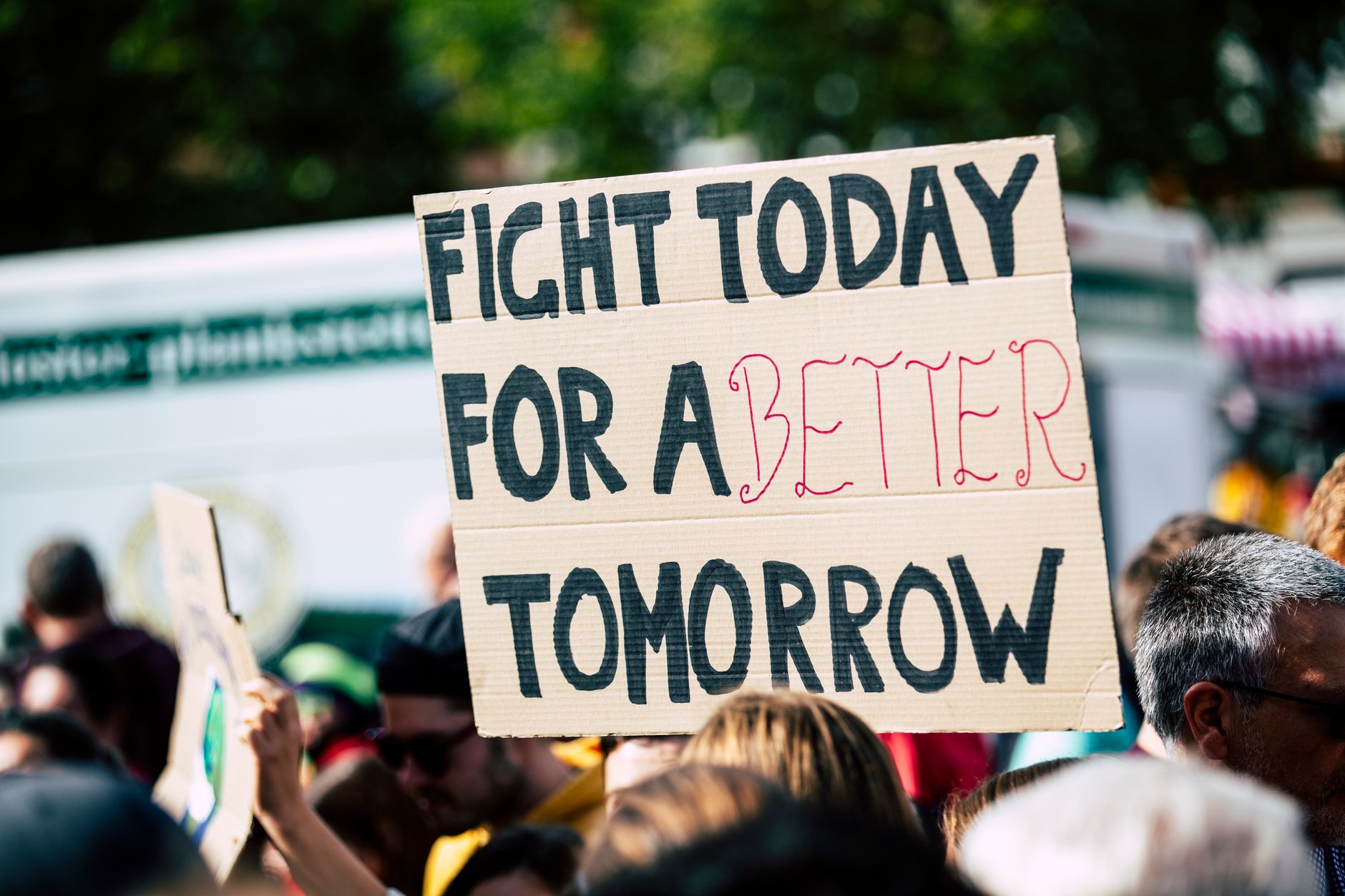
With municipal and provincial elections taking place in BC, and the midterms in the United States, I am thinking about the role of activism in politics.
In 2019 and 2020 in Victoria when I was a student, I was going to multiple climate marches, but I was not alone.
At the time Justin Trudeau would attend, and I remember he was the subject of great criticism. He was the sitting prime minister who bought a pipeline, so was he protesting… himself?
The issue is much deeper than the occasional prime minister attending a protest. Now politics and activism seem to be melded together. It is so interesting to watch political figure after political figure claims that they are part of a movement, revolution, or community work.
Bernie Sanders, for instance, is a prime example of a politician spearheading a movement beyond politics.
I do not know if a politician can truly be an activist or not, but the answer is not binary. There probably is a grey area where you can do both. What I would like to argue is that there should be two prerequisites to be a political figure that is also an activist.
First, it is not enough to say that you are a political activist if you are trying to keep the same system intact. It can be self-serving to go to a protest, get some credibility in your community, and head off to government to keep the status quo the same.
What frustrates me about many political figures, including Bernie Sanders or other democratic socialists, is that there is a lot of talk about services such as healthcare, education, prison reform, etc., but little conversation about the system that delivers them.
Are elections the best way to organize a democracy, or do nonprofits, community organizers, and citizens’ assemblies also have a part to play beyond the next campaign?
That leads me to the second point: politicians who aspire to be activists should represent people excluded from the political process. If you are not lifting others up who are not in the electoral system, it is unfair to claim to be an activist.
Yet it is not just political figures who can struggle with the boundary between activism and politics. When I wrote It’s Okay to Be Radical, I argued that sometimes nonprofits can be afraid of saying the right thing if it is perceived the wrong way. The same is true for activists, who can themselves be swayed by credibility that comes from politicians representing their cause.
Activism is a source of power and community legitimacy, and it is important to remember that activism does not need a politician’s backing to make a difference. A political figure needs to discuss fifteen different issues each day – ranging from healthcare to education, to war and peace, to the last hockey game. An environmentalist can talk about environmentalism every day with much more focus.
Accordingly, environmental organizations and environmental scientists together have the ability to be unrelenting in pushing for change in a way a politician simply cannot.
Activists must take advantage of the opportunities that come from being outside of politics, and should be especially harsh on those who are inside.
Yes, political figures should do more to challenge systems and include people in decision-making, but when they do not, people outside of government must be more forceful in holding them to account.
I will leave everyone with one final thought. When it comes to making a change in this big, complex world, there simply is not a single way to achieve results. There are good and bad people in almost every institution. The problem, of course, is that there is no vocabulary for holding people to their word if they come up short.
You either are a member of Parliament or you are not. Who decides what an activist actually is? Is Beyoncé an activist or a billionaire? Is Mark Ruffalo an activist or a celebrity?
I think activism is too broad a term. A grassroots community organizer, a politician, and a student protester probably are all too different to be under the same umbrella in 2026. I hope that in the future, there are newer, more accurate words to define specific types of activism that can help us all figure out what role we play.
My hope in 2027 and beyond is to start developing a newer framework for understanding what actually makes change in the world that is both specific enough to be useful but broad enough that it can address the multiple types of activism that exist on their own terms. Stay tuned

