
“How vain it is to sit down and write when you have not stood up to live.” – Henry David Thoreau
Everything on this blog, in some form, uses artificial intelligence (AI). Either through researching, outlining, brainstorming, or editing, I take advantage of ChatGPT to help the writing process.
This disclaimer is not to say that I use AI on other platforms, or in other settings. For the sake of transparency, I’d like to be honest, and explain why I use AI and do not believe it negatively impacts the quality of my writing.
AI is a hot-button issue that is not completely understood. Despite its popularity as a concept, AI in writing is still rare. Accordingly, there are misconceptions regarding what AI can and cannot do.
For those unfamiliar with AI, I define it as the ability of a machine to perform tasks commonly associated with intelligent humans. The cliché in movies is of robots like HAL 9000 or Wall-E that are essentially digital people, having all the same traits, with some gimmicky quirks thrown in for good measure.
The pop culture description of AI is not entirely accurate. While you can teach a computer to match or even supersede a person in a specific task, no technology can equal the sheer complexity of the human brain. For instance, a computer can now easily beat a chess grandmaster, but you would not also trust a chess bot to give relationship advice or cook you a flavorful dinner.
So far, a computer can only rival a human in a specific domain. No AI is self-aware. In fact, we do not even know what human consciousness is, so the idea that we can create it in something else is farcical. Artificial general intelligence (AGI) refers to a computer’s ability to learn all or most of the tasks associated with a conscious being, and it is not anywhere near possible.
Take writing, for instance. AI is used constantly in the communications sector, both ethically and unethically. There is a specific type of AI that can mimic the writing process called a large language model (LLM) that is trained on gigabytes of text and can interpret how sentences and words function together. ChatGPT is the most popular LLM, used in multiple industries, from academics to journalism.
ChatGPT does not write the way a person does. It simply analyzes your request and generates the most likely appropriate response. If you ask ChatGPT to write a poem on a specific topic, it synthesizes the millions of poems it is trained on and then develops something that matches your description.
The implications are self-explanatory. In an instant, you can ask ChatGPT to write up an employment contract or a tenancy agreement. You can generate a 2000-word essay on medieval dentistry practices or a script for a rap battle between Socrates and Joan of Arc. You can also instantly get feedback on what you write in real-time, and workshop your ideas in an incredibly efficient way.
While ChatGPT might seem like a godsend for writers, there are many criticisms, some of which are quite fair. AI is often trained on copyrighted materials without the consent of the author. Moreover, some ethical consumers are critical of AI’s ecological impact, as it uses huge amounts of water and energy to cool its data centers and operate.
I have no problem with people who do not want to use AI, just like I have no problem with people who do not want to use computers, social media, or cell phones. All technologies have corresponding pros and cons that are up to the individual to decide their specific boundaries with. I am also incredibly critical of big-tech companies, who over the last twenty-five years have produced no shortage of dystopian problems.
However, there is one argument that I must respectfully disagree with. Some people contend that using AI while writing cheapens the result. That in a sense, it is not the writer, but a computer that is communicating a point, and the more people that use AI, the more standardized and bland writing becomes.
The argument that AI cheapens writing, either individually, or for society at large, is not only rooted in a misunderstanding of what AI is, but also in a deep misunderstanding of what writing is. In this disclaimer, I seek to make three points that explain why LLMs are not harmful to the creative process, regardless of their many shortcomings.
Technology is not as transformational as you think

This is not the first time I have written about technology. Over a year ago, before I even downloaded an LLM, I wrote a critical analysis of digital technology and its role in society. While I am skeptical of technology in many ways, it is important to note that innovation is nuanced.
To summarize what I have said before, technology of all kinds is a tool that is dependent on its user. No matter how advanced digitization, AI, or computing gets, people will always be people. It is a fair philosophical question to ask how different things can become if the people using new and innovative tools stay exactly the same, down to their genetic code.
Imagine, if 20 years ago, people argued that using Google to help write a paper disqualified your efforts. Search engines did not change writing, they changed the process. After all, you could do five hours’ worth of research in fifteen minutes.
The same can be said of the printing press, the typewriter, computers, television, and social media. Technology makes our lives more convenient, and the good elements of it should be embraced, but it is how we use the tool that makes the difference.
Practically speaking, when it comes to AI, the biggest flaw in assuming it cheapens writing is that you over-inflate its importance and capabilities. Writers draw from life experience, they do not merely synthesize data and regurgitate their findings. By arguing that an LLM can somehow outpace a human, you argue that there is nothing more to writing than imitation.
Good writers often live very human, and very real lives before they have something of meaning to contribute. If you do not believe me, then ask a professor who reviews university papers for a living. They can tell pretty quickly who uses AI, and who does not. Likewise, ask the head of a hiring committee that reviews hundreds of cover letters, and they will tell you the same thing.
AI, without a user that is well-versed in writing, is useless. Contemporary LLMs should be treated the way calculators are in schools. In the younger grades, when children are learning basic addition and subtraction, calculators are not allowed on tests. As students get onto more advanced subjects, calculators are treated as necessities that enable a higher level of thinking.
AI makes writing more accessible
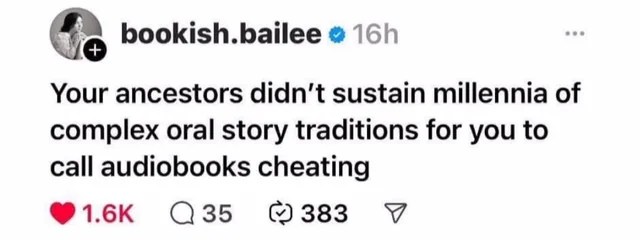
AI is an important tool in the writing process because it opens the door for inclusiveness. This topic is important to me because I have dyslexia, and without access to spellcheck, which is frankly a simple form of an LLM, I would not have graduated high school.
Throughout my entire education, I had teachers and mentors telling me that my writing was sub-par because of my spelling and my handwriting. It was not until I got access to a keyboard that I was able to come into my own.
While my journey may sound a little lazier than if I were to have simply overcome my difficulties with a can-do attitude and a quill, the fact is that technology saved me, and I imagine it has done the same for others. It is a tragedy for humanity that many great writers never had the chance to materialize because they lacked modern resources.
Part of why I am writing this disclaimer is because I do not want to become a writer who polices what tools other writers can and cannot use. I imagine that there are young kids today with learning differences that AI can help, and in an inclusive society, we should embrace that. There is a literary old guard that likes to determine what is legitimate art and writing and what is not.
The problem with publishers or teachers that have a zero-use policy towards AI is that it is completely unenforceable. Never mind the fact that AI has so many uses that it creates a double standard. You can’t use ChatGPT to generate a list of synonyms, but you can use thesaurus.com? You can’t use ChatGPT to workshop a paper, but you can use Grammarly? Who decides what technology is appropriate, and what technology isn’t?
My argument is that there is room for all types of content. If you do not want to watch movies with CGI, then don’t. If you do not want to listen to audiobooks or use a Kindle, then don’t. If you do not want to read poetry with AI components, then don’t. Society only serves to benefit if all writers, artists, and producers get a voice regardless of the technology they use, or the format they communicate in.
To me, what makes AI great is that it gives people the ability to communicate ideas in a new way, and it enables people with neurodiverse traits to communicate their ideas on an equal footing with others. My fear is that academic institutions are going to develop harmful policies that limit the use of AI in the classroom when instead we should be celebrating.
Gone are the days of artificially inflating your word count to make an arbitrary quota, gone is the need to add fluffy vocabulary to a paper for the sake of higher marks, and gone are low standards.
Now, we can all start asking deeper questions about writing and can bring more people to the table to do so. AI is not the ending of writing, it is the ending of mediocre writing. There is a difference.
Writing was never easy and never will be

The biggest concern I have with the notion that AI cheapens writing is the underlying idea that there are a bunch of writers just itching to have their work done for them. Writing is a process that should be incredibly difficult, and it does not just involve putting words on the page but editing as well.
Writing in its purest form involves taking accountability for every single word, period, and comma. It is a process of pure precision. A good writer knows full well that they will be spending hours reviewing each sentence until the entire piece is perfect.
Writers do not write because it is easy, they write because they have something powerful to say. While there are people who want to cut corners, the majority of writers can handle the new benefits of AI without letting it corrupt them.
Even if AI was an excellent writer, which it is not, people still have things to say in their own words. It is an unfair expectation for readers to assume the worst, and claim that any usage of AI is tantamount to laziness on behalf of the author.
The idea of using AI to write the entirety of a paper should be alien to any writer worth their salt. In fact, the editing process is so profoundly difficult that adding an AI to the mix makes things worse.
If you know what you want to say, then the time it takes to explain your request to an AI in enough detail would be better spent just writing the damn paper. Moreover, if you are going to use AI to edit the final product, just remember that the AI itself has no frame of reference for what you are saying.
AI cannot get into your head any more than a human editor can, and as most authors will admit, they usually do not share their work with someone else until they are confident in the final product.
Writing is a personal journey that involves personal preferences, and it is still just as hard, and just as dependent on the writer as it ever has been.
To conclude, I’ll say this, we live in a time of technological transformation that is nuanced and multifaceted. To say that AI is only going to have positive impacts is absurd, and I believe that AI will have a huge impact on communication.
However, AI does not cheapen writing, because it can’t. Writing is about so much more than patterns and coding; it is about subjectivity, emotions, and life experience. AI is changing rapidly, and if in a few years it develops consciousnesses or writes the next Anna Karenina, I will gladly acknowledge the error in my ways.
Until then, I will remain adamant that AI can serve many positive functions without subtracting from the fundamentals of writing. I use AI because it helps me communicate, and I like to think my readers trust me not to over-indulge, or use it unethically.
The one thing I do ask of other writers who use AI is to make an acknowledgement of it. Raising awareness of AI is critical to de-stigmatize its usage so that society can develop a healthier relationship with technology.
My goal is to give new writers a chance to use AI by talking about it openly. I hope that AI, with accountability and honesty, can lead to a more inclusive, intellectual, and innovative world.
 Dakota McGovern